A beautifully baked Tourtière (French-Canadian Meat Pie) is more than just a comforting meal—it’s a treasured tradition that has been passed down through generations of Canadian families. With its buttery, flaky pastry wrapped around a richly seasoned meat filling, Tourtière is often served during Christmas, New Year’s celebrations, Sunday family dinners, and other special occasions throughout Canada, particularly in Québec.
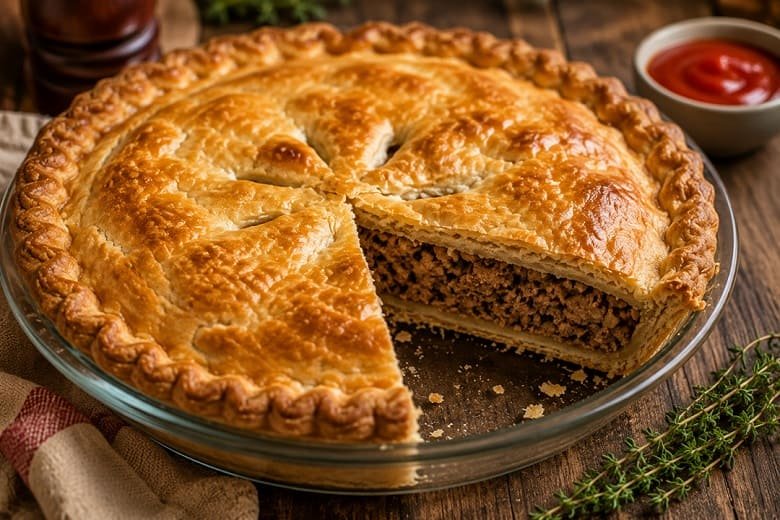
Although every family has its own version, the heart of Tourtière remains the same: a flavorful meat filling slowly cooked with onions, herbs, warming spices, and sometimes potatoes, all enclosed in a golden pie crust. This classic recipe preserves the traditional character of the dish while using straightforward techniques that make it approachable for everyday home cooks.
Whether you’re preparing Tourtière for the first time or recreating a family favorite, this guide explains every step in detail. From selecting the best ingredients to achieving a perfectly flaky crust, you’ll learn everything needed to bake a delicious homemade meat pie with confidence.
Why You’ll Love This Tourtière Recipe
Tourtière is a satisfying recipe that combines simple pantry ingredients with time-tested cooking techniques to create a comforting meal that’s perfect for sharing. While it looks impressive when served, the preparation is straightforward enough for beginner cooks who follow each step carefully.
This recipe is ideal for holidays, family gatherings, meal preparation, or whenever you’re craving a hearty homemade dinner. Once you master the basics, you’ll find yourself returning to this recipe throughout the year.
Highlights
- Authentic French-Canadian recipe
- Rich, savory meat filling
- Flaky golden pastry
- Beginner-friendly instructions
- Perfect for holidays and celebrations
- Excellent make-ahead meal
- Freezer friendly
- Family favorite
- Great for meal prep
- Easily customized with different meats
Each of these features contributes to a recipe that’s both practical and memorable. Whether served fresh from the oven or reheated the next day, Tourtière remains flavorful and satisfying.
What Is Tourtière?
Tourtière is a traditional French-Canadian meat pie made with seasoned ground meat baked inside a flaky pastry crust. Depending on the region and family tradition, the filling may include pork, beef, veal, game meat, potatoes, onions, and aromatic spices such as cinnamon, cloves, nutmeg, thyme, and savory herbs.
The combination of a crisp, buttery crust and a tender, well-seasoned filling creates a balanced dish that’s hearty without being overly heavy. While Tourtière is especially popular during the holiday season, many Canadian households enjoy it throughout the year as a comforting family meal.
A Brief History of Tourtière
Tourtière has been part of French-Canadian cuisine for centuries and is closely associated with Québec’s culinary heritage. Early settlers adapted traditional French meat pies using locally available ingredients, creating the version that has become a beloved Canadian classic.
Over time, different regions developed their own variations. Some recipes feature finely ground pork, while others use combinations of beef, veal, wild game, or even diced meat. Despite these differences, the essence of Tourtière—a flavorful meat filling enclosed in pastry—has remained remarkably consistent.
Today, Tourtière continues to symbolize family, celebration, and tradition. It’s commonly prepared during Christmas Eve (Réveillon), New Year’s Day, and other festive gatherings, bringing generations together around the dinner table.
Choosing the Best Meat
The quality and combination of meats significantly influence the flavor and texture of the finished pie. Traditional recipes often use pork because of its natural richness, but many modern versions combine several meats for greater depth of flavor.
Recommended Meat Options
| Meat | Why It Works |
|---|---|
| Ground pork | Traditional choice with rich flavor |
| Ground beef | Adds hearty texture |
| Ground veal | Creates a tender filling |
| Ground turkey | Leaner alternative |
| Ground chicken | Mild and lighter option |
| Wild game | Traditional in some regional recipes |
A combination of pork and beef is one of the most popular choices because it provides the perfect balance of richness and structure. If using lean meats such as turkey or chicken, consider adding a small amount of butter or olive oil to maintain moisture.
Choosing the Right Pie Crust
A good pie crust is just as important as the filling. The ideal crust should be flaky, buttery, and sturdy enough to hold the meat filling while remaining tender with every bite.
Recommended Options
| Crust Type | Best For |
|---|---|
| Homemade butter crust | Classic flavor |
| All-butter pastry | Extra flaky texture |
| Shortcrust pastry | Traditional style |
| Store-bought pastry | Convenient option |
| Whole wheat pastry | Healthier alternative |
If you’re new to pastry making, a quality store-bought crust can still produce excellent results. However, homemade pastry provides the best texture and allows you to control the ingredients.
Ingredients
Gathering all the ingredients before you begin makes the preparation process much smoother. Organizing everything in advance also helps ensure that the filling and pastry come together efficiently without interruptions.
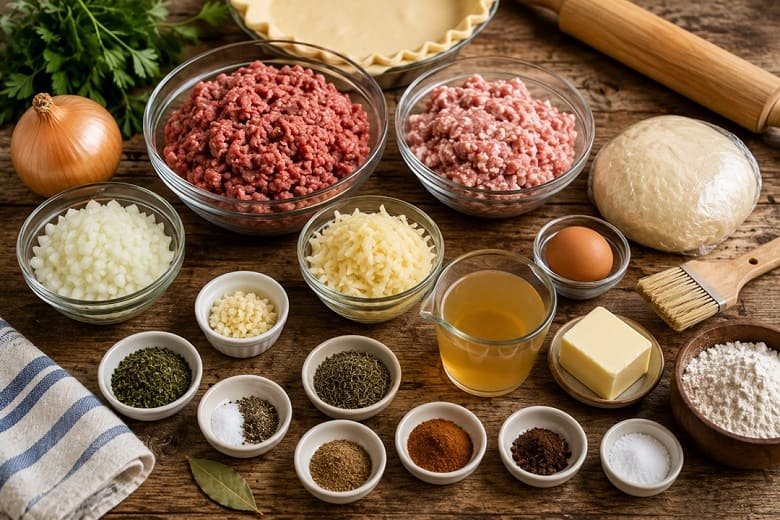
For the Meat Filling
| Ingredient | Quantity |
|---|---|
| Ground pork | 1 pound |
| Ground beef | 1 pound |
| Onion, finely diced | 1 large |
| Garlic cloves, minced | 3 |
| Russet potato, peeled and grated | 1 medium |
| Chicken or beef broth | 1 cup |
| Butter | 2 tablespoons |
| Salt | 1½ teaspoons |
| Black pepper | 1 teaspoon |
Herbs and Spices
| Ingredient | Quantity |
|---|---|
| Ground cinnamon | ½ teaspoon |
| Ground cloves | ¼ teaspoon |
| Ground nutmeg | ¼ teaspoon |
| Dried thyme | 1 teaspoon |
| Dried sage | ½ teaspoon |
| Allspice | ¼ teaspoon |
| Bay leaf | 1 |
The blend of herbs and warm spices gives Tourtière its distinctive flavor. While the seasonings may seem unusual at first, they create a subtle, aromatic profile that complements the savory meat rather than making it taste sweet.
For the Pie Crust
| Ingredient | Quantity |
|---|---|
| All-purpose flour | 2½ cups |
| Cold unsalted butter | 1 cup |
| Salt | 1 teaspoon |
| Ice water | 6–8 tablespoons |
| Egg (for egg wash) | 1 |
Cold butter is the key to a flaky pastry. Keeping the butter chilled until mixing helps create the delicate layers that make homemade pie crust so enjoyable.
Ingredient Notes
Every ingredient contributes to the flavor, texture, and structure of the finished pie. Understanding why each one is included makes it easier to prepare the recipe successfully and confidently substitute ingredients if needed.
Ground Pork
Ground pork is the traditional foundation of Tourtière. Its natural fat content keeps the filling moist and delivers the rich flavor associated with authentic French-Canadian meat pies.
Ground Beef
Ground beef adds body and a heartier texture to the filling. Using a lean-to-medium fat percentage helps create a balanced filling without becoming greasy.
Potato
Grated potato acts as a natural binder while also contributing moisture. It blends into the filling during cooking and helps achieve the traditional texture without making the pie dense.
Warm Spices
Cinnamon, cloves, nutmeg, and allspice are used in small amounts to enhance the savory ingredients. Rather than making the filling sweet, these spices provide warmth and depth that distinguish Tourtière from other meat pies.
Kitchen Equipment
Having the right kitchen equipment makes preparing Tourtière much easier and helps ensure consistent results. Most of the tools required are common household items, so you won’t need any specialized baking equipment to make this traditional meat pie.
Before you begin, gather all of your tools and place them within easy reach. This simple preparation keeps the cooking process organized and allows you to focus on creating the perfect filling and flaky pastry.
- Large skillet or sauté pan
- Medium saucepan (optional)
- Large mixing bowl
- Wooden spoon
- Silicone spatula
- Chef’s knife
- Cutting board
- Measuring cups
- Measuring spoons
- Rolling pin
- 9-inch pie dish
- Pastry brush
- Fork
- Cooling rack
- Plastic wrap
- Wire whisk
A sturdy rolling pin helps create an evenly rolled pastry, while a pastry brush makes it easy to apply the egg wash that gives the crust its beautiful golden color. A cooling rack is also useful because it allows air to circulate underneath the pie after baking, helping the crust stay crisp.
Preparing the Meat Filling
The filling is the heart of every Tourtière, and taking the time to prepare it properly will reward you with a rich, flavorful pie. Slowly cooking the meat with vegetables, broth, and spices allows every ingredient to blend together while creating a moist filling that holds its shape when sliced.
Although this process takes a little time, most of it involves gentle simmering, making it easy even for beginner cooks.
Step 1: Cook the Onion
Melt the butter in a large skillet over medium heat. Add the finely diced onion and cook for about 5 to 7 minutes until it becomes soft and translucent.
Cooking the onions first develops their natural sweetness and creates a flavorful base for the filling. Stir occasionally to prevent browning, as lightly cooked onions blend more smoothly with the meat.
Step 2: Add the Garlic
Add the minced garlic to the softened onions and cook for about one minute while stirring continuously. Garlic cooks quickly, so avoid leaving it unattended.
Cooking the garlic briefly releases its aroma without allowing it to burn. Burnt garlic can introduce bitterness, which may affect the overall flavor of the filling.
Step 3: Brown the Meat
Add the ground pork and ground beef to the skillet. Break the meat into small pieces using a wooden spoon while cooking until it is fully browned.
Proper browning develops a deeper, more savory flavor through caramelization. Continue stirring occasionally so the meat cooks evenly without forming large clumps.
Step 4: Drain Excess Fat
If there is a large amount of fat in the pan, carefully drain most of it while leaving a small amount behind for flavor. This prevents the finished pie from becoming greasy.
Removing excess fat also helps the pastry remain crisp after baking rather than becoming soggy from excess moisture.
Step 5: Add the Herbs and Spices
Sprinkle in the thyme, sage, cinnamon, cloves, nutmeg, allspice, salt, pepper, and bay leaf. Stir thoroughly so every portion of the meat is evenly coated with the seasonings.
The spices may seem unusual if you’re making Tourtière for the first time, but they create the signature aroma that has defined this traditional Canadian recipe for generations.
Step 6: Add the Potato and Broth
Stir the grated potato into the meat mixture, followed by the broth. Mix everything well until evenly combined.
The grated potato gradually softens during cooking and naturally thickens the filling. The broth adds moisture while helping the flavors blend together beautifully.
Step 7: Simmer the Filling
Reduce the heat to low and allow the filling to simmer gently for 20 to 25 minutes. Stir every few minutes to prevent sticking and to ensure even cooking.
As the mixture cooks, the broth will reduce and the filling will become thicker. It should remain moist but not watery, making it easy to spread inside the pie crust.
Step 8: Cool the Filling
Remove the bay leaf and allow the filling to cool for approximately 20 to 30 minutes before assembling the pie.
Cooling is an important step because placing hot filling onto pastry can soften the butter in the dough, making the crust less flaky during baking.
Preparing the Pie Crust
A flaky pastry crust is one of the defining features of an excellent Tourtière. Keeping the ingredients cold and handling the dough gently will help create delicate layers that bake into a crisp, golden crust.
If you’re using homemade pastry, don’t rush this stage. A few extra minutes of care will greatly improve the finished pie.
Step 1: Combine the Dry Ingredients
In a large mixing bowl, whisk together the flour and salt until evenly combined. Mixing the dry ingredients first ensures the salt is distributed throughout the dough.
This simple step creates a consistent base before the butter is incorporated.
Step 2: Cut in the Butter
Add the cold butter cubes to the flour mixture. Using a pastry cutter or your fingertips, work the butter into the flour until the mixture resembles coarse crumbs with a few pea-sized pieces of butter remaining.
Leaving small pieces of butter intact is essential because they create steam during baking, producing the flaky layers that make homemade pastry so appealing.
Step 3: Add Ice Water
Gradually add the ice water one tablespoon at a time while gently mixing the dough. Stop adding water as soon as the dough comes together when pressed.
Adding too much water can make the pastry tough, so use only the amount needed to form a cohesive dough.
Step 4: Chill the Dough
Divide the dough into two equal portions and shape each into a flat disc. Wrap them tightly in plastic wrap and refrigerate for at least one hour.
Chilling allows the gluten to relax while firming the butter, making the dough easier to roll and helping the crust bake evenly.
Assembling the Pie
Taking your time during assembly helps create a beautiful pie that bakes evenly and slices neatly. Work gently with the pastry to avoid stretching or tearing the dough.
If the dough becomes too soft while you’re working, return it to the refrigerator for a few minutes before continuing.
Step 1: Roll the Bottom Crust
Lightly flour your work surface and roll one disc of chilled pastry into a circle approximately 12 inches in diameter. Carefully transfer it to a 9-inch pie dish and gently press it into the bottom and sides.
Avoid stretching the pastry, as stretched dough tends to shrink during baking. Let the crust settle naturally into the pie dish.
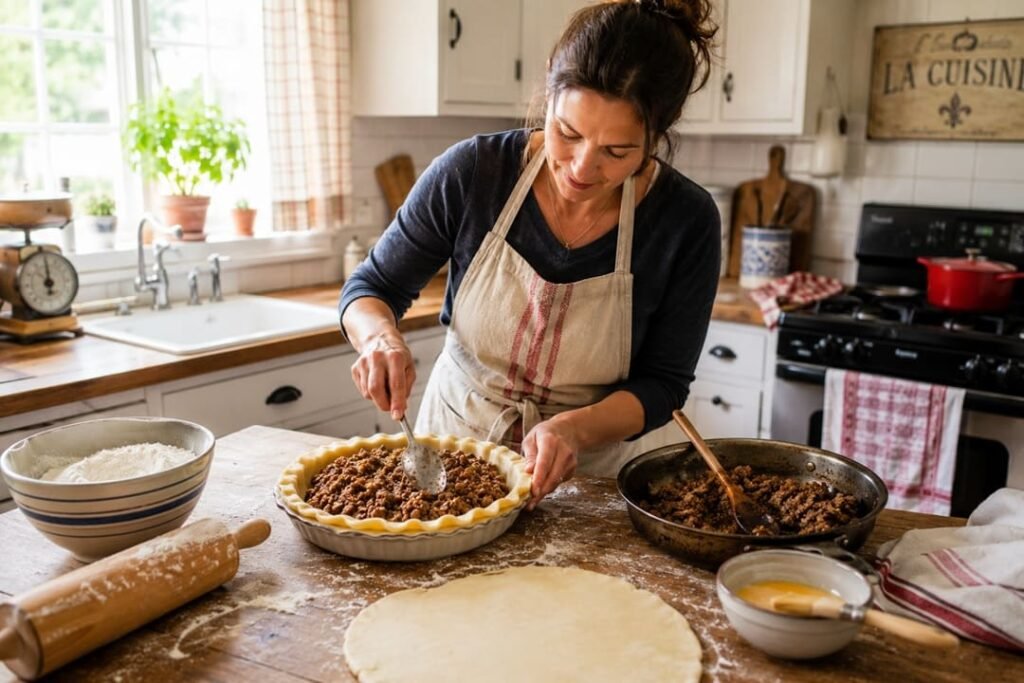
Step 2: Add the Filling
Spoon the cooled meat filling evenly into the pastry shell and spread it with the back of a spoon until the surface is level.
An even filling ensures that every slice contains the perfect balance of meat and pastry while helping the pie bake uniformly.
Step 3: Roll the Top Crust
Roll the second disc of pastry into another 12-inch circle and carefully place it over the filling. Trim any excess pastry, leaving about 1 inch extending beyond the edge of the pie dish.
Working carefully helps keep the crust smooth and prevents tears that could allow juices to escape during baking.
Step 4: Seal the Edges
Fold the edges of the top and bottom crusts together and crimp them using your fingers or the tines of a fork. A well-sealed crust keeps the filling inside while giving the pie an attractive finished appearance.
Crimping also strengthens the edge of the pie, making it easier to slice and serve later.
Step 5: Cut Steam Vents
Using a sharp knife, cut four to six small slits in the center of the top crust.
These vents allow steam to escape while baking, preventing the pastry from becoming soggy or cracking unexpectedly.
Step 6: Apply the Egg Wash
Beat the egg with one tablespoon of water and brush it evenly over the entire surface of the pie using a pastry brush.
The egg wash helps the crust develop a glossy, deep golden finish while adding a beautiful bakery-style appearance.
Step 7: Bake the Tourtière
Preheat the oven to 400°F (200°C) and bake the pie for 45 to 55 minutes, or until the crust is deep golden brown and the filling is bubbling gently through the steam vents.
If the edges begin browning too quickly, loosely cover them with aluminum foil during the final part of baking.
Step 8: Rest Before Serving
Remove the pie from the oven and place it on a cooling rack for 15 to 20 minutes before slicing.
Allowing the pie to rest helps the filling set properly, making it easier to cut clean slices while preserving the juicy texture of the meat filling.
Baking Time and Temperature Guide
Baking Tourtière at the correct temperature is essential for achieving a crisp, golden crust while ensuring the filling is thoroughly heated. Since every oven heats slightly differently, begin checking the pie a few minutes before the recommended baking time.
If the crust browns faster than expected, loosely cover the edges with aluminum foil while allowing the center to continue baking.
| Stage | Temperature | Time |
|---|---|---|
| Preheat oven | 400°F (200°C) | 15–20 minutes |
| Bake pie | 400°F (200°C) | 45–55 minutes |
| Cover edges if needed | 400°F (200°C) | Last 15–20 minutes |
| Rest before slicing | Room temperature | 15–20 minutes |
The pie is ready when the crust is evenly golden brown and the filling is bubbling gently through the steam vents. Resting the pie before cutting allows the filling to firm up, making it much easier to serve neat slices.
Expert Tips for the Perfect Tourtière
Although Tourtière is a straightforward recipe, a few professional techniques can elevate the flavor, texture, and presentation. These tips are easy to follow and help produce bakery-quality results at home.
- Use freshly ground spices whenever possible.
- Chill the pastry dough before rolling.
- Allow the meat filling to cool before assembling the pie.
- Don’t overwork the pastry dough.
- Keep the butter cold throughout pastry preparation.
- Taste the filling before assembling the pie and adjust the seasoning if necessary.
- Cut steam vents in the top crust.
- Brush the crust evenly with egg wash for a beautiful golden finish.
- Let the pie rest before slicing.
- Use a sharp serrated knife for clean slices.
These small details make a noticeable difference in the final result. Paying attention to temperature, timing, and pastry handling helps create a pie that’s both beautiful and delicious.
Common Mistakes to Avoid
Even experienced bakers occasionally encounter challenges when making meat pies. Understanding these common mistakes can help ensure your Tourtière turns out perfectly on the first attempt.
- Using warm butter when making the pastry.
- Skipping the chilling time for the dough.
- Filling the pie with hot meat mixture.
- Rolling the pastry too thin.
- Overfilling the pie.
- Forgetting to cut steam vents.
- Baking at an incorrect temperature.
- Slicing the pie immediately after baking.
- Under-seasoning the meat filling.
- Overworking the dough.
Most pastry problems can be avoided simply by keeping the ingredients cold and handling the dough gently. Likewise, allowing the pie to cool slightly before slicing helps the filling stay intact.
Regional Variations
One of the fascinating aspects of Tourtière is that no single recipe represents every region of Canada. Different communities and families have developed their own traditions, resulting in several delicious variations.
Exploring these regional styles allows you to appreciate the rich culinary heritage behind this classic dish and perhaps discover a version that becomes your own family favorite.
Québec Tourtière
This is the version most people recognize as the classic French-Canadian meat pie. It typically combines ground pork with warm spices, onions, and herbs inside a flaky pastry crust.
Its balanced flavor and simple preparation have made it one of Canada’s most beloved comfort foods.
Montréal Style
Many Montréal recipes combine pork and beef, creating a heartier filling with a deeper, more robust flavor. The seasoning often remains subtle, allowing the quality of the meat to shine.
This variation is ideal for those who enjoy a rich but well-balanced meat pie.
Lac-Saint-Jean Tourtière
Unlike the traditional ground meat version, the famous Lac-Saint-Jean Tourtière features cubes of meat layered with potatoes inside a much deeper pie.
The filling cooks slowly for several hours, resulting in incredibly tender meat and rich flavors. This impressive version is commonly prepared for holiday celebrations and large family gatherings.
Three-Meat Tourtière
Some families combine pork, beef, and veal to create a filling with exceptional richness and complexity.
Using multiple meats creates layers of flavor while maintaining the moist texture that makes Tourtière so satisfying.
Wild Game Tourtière
In some regions, venison, elk, moose, rabbit, or other game meats replace or supplement the traditional pork.
These versions reflect Canada’s hunting traditions and provide a distinctive flavor while preserving the classic character of the dish.
Serving Suggestions
Tourtière is a complete meal on its own, but pairing it with carefully chosen accompaniments enhances both its flavor and presentation. The rich meat filling pairs beautifully with lighter side dishes that balance the meal.
Whether you’re serving the pie during the holidays or for a casual family dinner, these suggestions help create a memorable dining experience.
- Fresh green salad
- Creamy mashed potatoes
- Roasted root vegetables
- Steamed green beans
- Buttered peas
- Homemade cranberry sauce
- Pickled beets
- Coleslaw
- Roasted Brussels sprouts
- Mixed seasonal vegetables
These sides add freshness, texture, and color while complementing the savory flavors of the meat pie without overwhelming it.

Traditional Canadian Accompaniments
Many Canadian families enjoy Tourtière with traditional condiments that have been served alongside the pie for generations. These simple additions provide contrast and enhance the savory filling.
Although preferences vary from household to household, the following accompaniments are among the most popular.
- Tomato ketchup
- Fruit ketchup
- Pickled cucumbers
- Chow chow relish
- Homemade cranberry sauce
- Beet relish
- Pickled onions
- Dijon mustard
- Apple chutney
- Homemade pickles
The slight sweetness or acidity of these accompaniments balances the richness of the meat filling and flaky pastry, creating a well-rounded meal.
Best Side Dishes
Choosing complementary side dishes transforms Tourtière into a complete family feast. Light vegetables and fresh salads help balance the hearty nature of the pie.
You can mix and match these options depending on the occasion, whether it’s a holiday celebration or a cozy weekend dinner.
- Caesar salad
- Garden salad
- Roasted carrots
- Garlic green beans
- Honey-glazed carrots
- Roasted asparagus
- Creamed corn
- Sweet potato mash
- Potato wedges
- Winter vegetable medley
Including one vegetable-based side and one starch often creates a balanced and satisfying plate suitable for guests or family dinners.
Beverage Pairings
The right beverage enhances the overall dining experience by complementing the savory flavors of the meat pie. Both warm and cold drinks work well, depending on the season and occasion.
For holiday meals, warm beverages create an especially cozy atmosphere, while refreshing cold drinks are perfect for everyday dinners.
Hot Beverages
- Freshly brewed coffee
- Black tea
- Earl Grey tea
- Herbal tea
- Hot apple cider
Warm beverages are particularly enjoyable during colder months and pair naturally with Tourtière’s comforting flavors.
Cold Beverages
- Sparkling apple cider
- Fresh apple juice
- Cranberry juice
- Lemon-infused sparkling water
- Iced tea
These refreshing drinks help cleanse the palate while complementing the rich, savory filling.
Make-Ahead Instructions
Tourtière is one of the best recipes to prepare ahead of time because both the filling and the assembled pie store exceptionally well. Preparing components in advance can make holiday meals and family gatherings much less stressful.
The meat filling can be cooked up to two days ahead and refrigerated until needed. Alternatively, assemble the entire pie, cover it tightly, and refrigerate it overnight before baking.
Storage Guide
Proper storage helps preserve both the flavor and texture of the pie. Allow the Tourtière to cool completely before wrapping or transferring it to an airtight container.
| Storage Method | Time |
|---|---|
| Room temperature | Up to 2 hours |
| Refrigerator | 3–4 days |
| Airtight container | Recommended |
| Best quality | Within 2–3 days |
Keeping the pie well covered prevents the pastry from drying out and helps maintain its freshness.
Freezing Instructions
Tourtière freezes exceptionally well, making it one of the best recipes for meal preparation or holiday planning. You can freeze either the fully baked pie or an unbaked assembled pie, depending on your schedule and preferences.
For the best quality, wrap the pie tightly to protect it from freezer burn and label it with the preparation date. Proper packaging helps preserve both the flaky crust and the flavorful meat filling.
Freezing a Baked Tourtière
Allow the pie to cool completely before wrapping it in plastic wrap followed by a layer of aluminum foil. Place it in a freezer-safe bag or airtight container.
A fully baked Tourtière can be frozen for up to 3 months while maintaining excellent flavor and texture.
Freezing an Unbaked Tourtière
Assemble the pie but do not apply the egg wash before freezing. Wrap it securely in plastic wrap and aluminum foil, then freeze until needed.
When you’re ready to bake, thaw the pie overnight in the refrigerator, brush it with egg wash, and bake according to the recipe instructions.
Freezing Individual Slices
Individual slices are convenient for quick lunches or small meals. Wrap each slice separately before placing them together in a freezer-safe container.
This method allows you to thaw only the amount you need while keeping the remaining portions fresh.
Reheating Methods
Proper reheating helps restore the crispness of the pastry while warming the filling evenly. Gentle heating is recommended to prevent the crust from becoming soggy or overcooked.
If reheating from frozen, thaw the pie overnight in the refrigerator for the best results.
Oven (Recommended)
Preheat the oven to 350°F (175°C). Place the pie or individual slices on a baking tray and heat for 20 to 30 minutes, or until thoroughly warmed.
Reheating in the oven keeps the pastry crisp and provides the closest result to freshly baked Tourtière.
Air Fryer
Place an individual slice in the air fryer and heat at 325°F (160°C) for 6 to 8 minutes.
This method is quick and helps restore the flaky texture of the crust without drying out the filling.
Microwave
Place a slice on a microwave-safe plate and heat in 30-second intervals until warmed through.
Although convenient, the microwave may soften the pastry. For a crisp crust, finish the slice in a hot oven or air fryer for a few minutes after microwaving.
Nutritional Information
The nutritional values below are approximate and will vary depending on the type of meat, pastry, and portion size used.
| Nutrient | Amount per Serving |
|---|---|
| Calories | 540 kcal |
| Protein | 27 g |
| Carbohydrates | 31 g |
| Fat | 34 g |
| Saturated Fat | 14 g |
| Cholesterol | 105 mg |
| Sodium | 680 mg |
| Fiber | 2 g |
| Sugar | 2 g |
| Calcium | 50 mg |
| Iron | 4 mg |
Tourtière is a satisfying source of protein and energy, making it an excellent choice for hearty family meals. Pairing it with fresh vegetables or a crisp salad creates a more balanced plate.
Healthier Alternatives
Although traditional Tourtière is wonderfully rich, a few simple adjustments can reduce fat and calories while preserving its classic flavor. These alternatives are ideal for those looking to enjoy the dish more frequently without sacrificing taste.
Small ingredient substitutions can make a noticeable nutritional difference while keeping the recipe authentic and satisfying.
- Use lean ground pork or lean ground beef.
- Replace part of the meat with finely chopped mushrooms.
- Add extra grated vegetables such as carrots or zucchini.
- Prepare the filling with olive oil instead of additional butter.
- Use whole wheat pastry for extra fiber.
- Reduce the amount of salt and choose low-sodium broth.
- Increase the herbs for additional flavor without adding extra sodium.
These changes create a lighter version of Tourtière while maintaining its comforting character and delicious homemade taste.
Gluten-Free Version
Tourtière can easily be adapted for a gluten-free diet by replacing the traditional pastry with a certified gluten-free pie crust. Many ready-made gluten-free crusts are now available, or you can prepare one from scratch using gluten-free flour blends.
Also ensure that your broth, seasonings, and other packaged ingredients are certified gluten-free to avoid hidden sources of gluten.
Dairy-Free Version
To prepare a dairy-free Tourtière, replace the butter in the pastry with dairy-free baking margarine or vegetable shortening. If your pastry recipe contains milk, substitute it with an unsweetened plant-based alternative.
The meat filling itself is naturally dairy-free, making this adaptation simple while preserving the traditional flavor of the pie.
Frequently Asked Questions
Final Thoughts
Tourtière (French-Canadian Meat Pie) is much more than a traditional recipe—it’s a cherished symbol of Canadian culinary heritage that brings families together around the table. Its flaky golden pastry, richly seasoned meat filling, and comforting aroma make it a timeless dish that’s equally suited to festive holiday celebrations and everyday family dinners.
Whether you’re honoring family traditions or trying this iconic Canadian recipe for the first time, Tourtière offers a rewarding baking experience and a meal that’s both hearty and memorable. With the detailed guidance, practical tips, and variations provided throughout this recipe, you’ll have everything you need to prepare an authentic homemade meat pie that your family and guests will enjoy for years to come.